「英中对照」Willow数据层在建筑运营场景的实际应用
Real World Applications of Willow’s Data Layer
Willow介绍其由本体、数据形状等构成的数据层在建筑运营场景的两项实际应用,分别为热水系统持续调试与实验室排风优化。该数据层的热水供水设定值重置监测技能可依据室外气温核对BMS控制逻辑与温度传感器校准状态,识别阻碍水温合理重置的异常。其实验室排风优化应用依托含3000余种模型的本体体系建模跨系统交互,可识别通风柜不安全、高能耗开度及对关联区域气流性能的影响。
by Rick Szcodronski, Chief Product Officer, Willow
作者:Rick Szcodronski,Willow 首席产品官
Ontology, shapes, and data form the foundation of Willow’s data layer. For many organizations, adopting a shared ontology or traditional tagging model is a logical starting point. However, the lack of consistent data shapes across vendors makes true plug-and-play integration and seamless migration difficult to achieve. Willow takes a proactive approach to identifying and addressing ontology and data shape challenges as they arise, focusing on removing key barriers to scaling across the industry. As new connectors are developed and new use cases emerge, data shapes are created or evolved thoughtfully while maintaining consistency. This tight, iterative approach enables Willow to evolve the ontology rapidly and ultimately enable fast onboarding.本体、形状和数据构成了 Willow 数据层的基础。对许多组织而言,采用共享本体或传统标记模型是合乎逻辑的起点。然而,不同供应商之间缺乏一致的数据形状,使得真正的即插即用集成和无缝迁移难以实现。Willow 采取主动方法,在本体和数据形状挑战出现时加以识别和解决,重点消除行业规模化扩展的关键障碍。随着新连接器的开发和新用例的出现,数据形状会在保持一致性的同时经过审慎设计或演进。这种紧密的迭代方法使 Willow 能够快速发展本体,并最终实现快速接入。
In a previous article, we explored the data layer that enables Willow’s operational AI platform comprising a rich ontology, shapes, and data. Let’s now explore real-world applications that show how ontology, shapes, and data come together to bring solutions to life.在上一篇文章中,我们探讨了支撑 Willow 运营型 AI 平台的数据层,它由丰富的本体、形状和数据组成。现在,让我们探讨一些实际应用,展示本体、形状和数据如何结合在一起,使解决方案成为现实。
Continuous Commissioning on a Hot Water System热水系统的持续调适
Let’s start with a use case that illustrates the role of ontology and shape, and how modeling a hot water commissioning system in Willow enables reasoning at the system level rather than the point level.让我们从一个用例开始,该用例说明了本体和形状的作用,以及在 Willow 中对热水调适系统进行建模如何实现系统级而非点位级的推理。
Most energy-efficient heating systems adjust the hot water supply temperature based on outdoor conditions. During milder weather, lower supply temperatures are sufficient to heat the building, reducing energy consumption and unnecessary heat loss. As the outdoor air temperature drops, the system increases the hot water supply temperature to maintain comfort and proper heating performance.大多数节能供暖系统会根据室外状况调节热水供水温度。在较温和的天气里,较低的供水温度即可为建筑物供暖,从而减少能源消耗和不必要的热损失。随着室外空气温度下降,系统会提高热水供水温度,以维持舒适度和正常供暖性能。
Willow’s Heating Plant HW Supply Setpoint Not Reset per Design OAT Skill continuously monitors whether the hot water supply setpoint is being reset correctly based on the Outdoor Air Temperature (OAT). The Skill evaluates both the mechanical sequence of operation and the implemented control program in the BMS to confirm that the programmed logic matches the engineer’s specified reset schedule. It identifies conditions such as fixed setpoints, overrides, or incorrect control logic that may prevent proper resetting, and it verifies the accuracy and calibration of the outdoor air and supply water temperature sensors to ensure the strategy is functioning as intended.Willow 的 Heating Plant HW Supply Setpoint Not Reset per Design OAT 技能持续监测热水供水设定值是否根据室外空气温度(OAT)得到正确重设。该技能会评估 BMS 中的机械运行顺序和已实施的控制程序,以确认编程逻辑与工程师规定的重设表一致。它可识别可能妨碍正确重设的状况,例如固定设定值、超驰或错误的控制逻辑,并验证室外空气和供水温度传感器的准确性与校准情况,以确保该策略按预期运行。
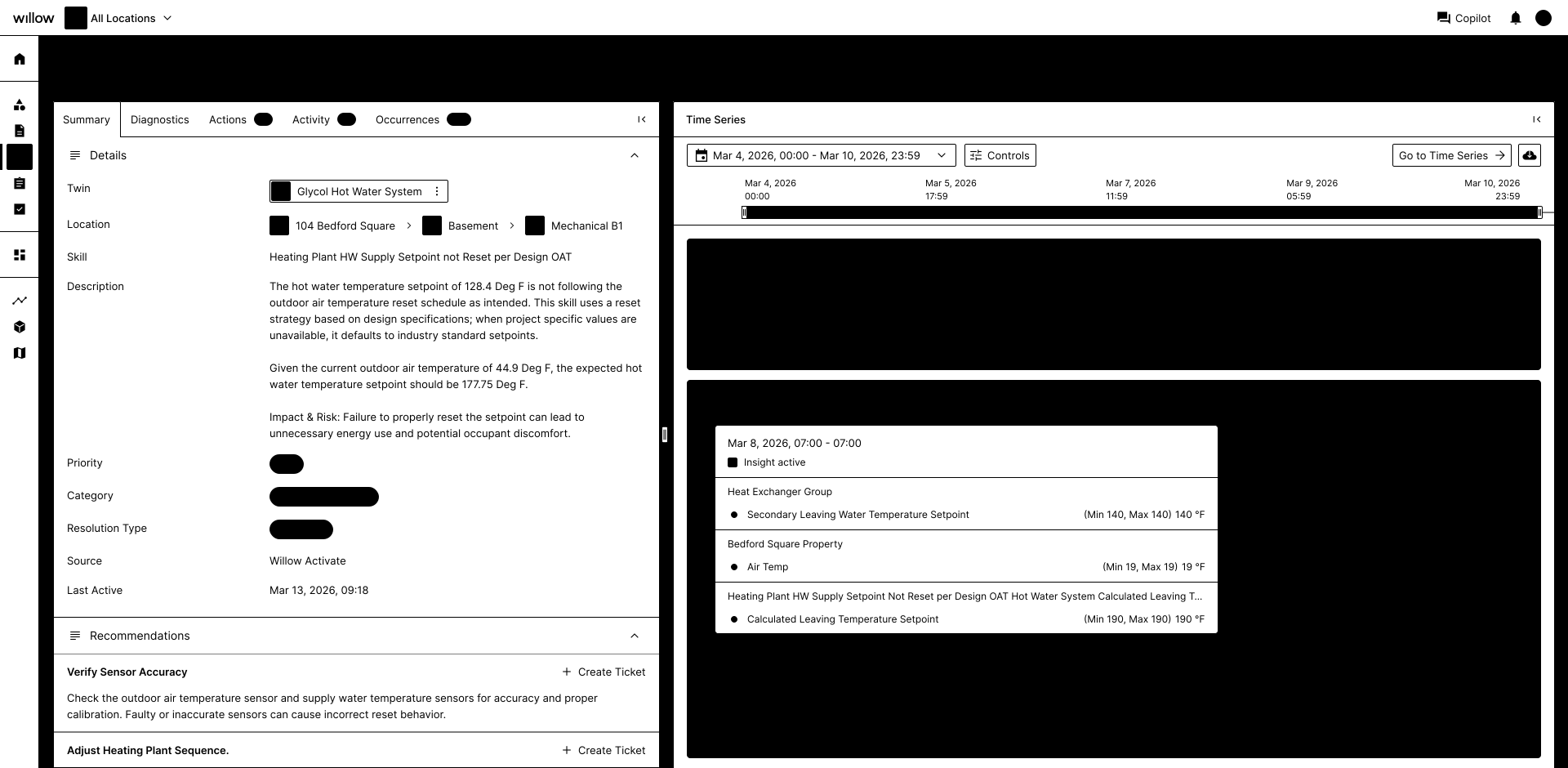
Modeling a hydronic hot water system can be done in many ways, and Willow’s team carefully weighs the trade-offs of each approach to ensure scalability and consistency across portfolios. While there is no single “best” modeling pattern, a decision must be made to support customer outcomes. In this example, the system’s design parameters, specifically the OAT-based reset schedule are stored as properties on the digital twin. By comparing this baseline to live telemetry from the equipment, Willow can detect anomalies, control drift, and performance degradation over time.热水循环系统的建模有多种方式,Willow 团队会谨慎权衡每种方法的利弊,以确保各资产组合具备可扩展性和一致性。虽然不存在唯一的“最佳”建模模式,但必须做出决策以支持客户成果。在此示例中,系统的设计参数,特别是基于 OAT 的重设表,作为属性存储在数字孪生中。通过将该基线与设备的实时遥测数据进行比较,Willow 可以随着时间推移检测异常、控制漂移和性能下降。
Lab Exhaust Optimization实验室排风优化
Now let’s walk through a use case that illustrates the role of Willow’s data layer, and how ontology for fume hoods in Willow enables modeling cross-systems interactions between pressurization zones and fume hoods.下面通过一个用例来说明 Willow 数据层的作用,以及 Willow 中通风柜的本体如何支持对加压区与通风柜之间的跨系统交互进行建模。

Critical spaces such as laboratories require monitoring and control beyond temperature and humidity signals. Enabling real-world use cases like sash hood position management for optimizing energy consumption require the system to describe positive or negative pressurization in HVAC Zones and make up airflow to point-of-use exhaust assets modeled as Fume Hoods. Willow’s ontology for fume hoods supports the concept of a pressurization zone and grouping exhaust fans that control an exhaust plenum together.实验室等关键空间需要温湿度信号之外的监测与控制。要实现通风柜视窗位置管理等优化能耗的实际用例,系统需要描述 HVAC 区域的正压或负压状态,并为建模为通风柜的使用点排风资产补风。Willow 的通风柜本体支持加压区域概念,并支持将共同控制排风静压箱的排风机分组。
In Willow, the HVAC Zone model forms the foundation for managing conditioned spaces, providing a structure to link all relevant air supply and exhaust devices, including terminal units, general exhausts, and point exhausts like fume hoods, to the zones they serve. HVAC Pressurization Zone inherits from HVAC Zone and has child models, HVAC Negative Pressurization Zone and HVAC Positive Pressurization Zone that deliver specific intent for spaces that must reliably keep contaminants contained or protected, respectively. Pressure state is computed by connecting to real-time telemetry for supply and exhaust airflow, and differential pressure sensors.在 Willow 中,HVAC 区域模型是管理空调空间的基础,提供一种结构,将所有相关送风与排风设备(包括末端机组、全面排风以及通风柜等局部排风)链接到其服务的区域。HVAC 加压区域继承自 HVAC 区域,并有子模型 HVAC 负压区域和 HVAC 正压区域;这两个模型分别表达必须可靠保持污染物受控或保持空间防护的特定意图。压力状态通过接入送风量和排风量的实时遥测以及压差传感器来计算。
The Fume Hood model in Willow inherits from the Ventilation Hood model, which in turn inherits from HVAC Equipment, and its parent Asset model. The Fume Hood model has deeper specializations, to describe if it is a snorkel exhaust, benchtop or walk-in fume hood.Willow 中的通风柜模型继承自通风罩模型,而通风罩模型又继承自 HVAC 设备及其父级资产模型。通风柜模型具有更深层次的特化,用于描述其是 snorkel 排风型、台式还是步入式通风柜。
Properties of the Fume Hood model capture details like required face velocity setpoint to capture how fast air is meant to enter the hood opening at a standardized sash position, e.g. at 18 inches sash height. Bypass type with values of open versus restricted captures how freely air is allowed to enter through the bypass opening when the sash is lowered. Min and Max airflows capture design specs.通风柜模型的属性记录要求的面风速设定值等详情,用于表示在标准视窗位置(例如视窗高度为 18 英寸)时空气进入通风柜开口的预期速度。旁通类型的取值为 open 和 restricted,用于描述视窗降下时空气通过旁通开口进入的顺畅程度。最小风量和最大风量记录设计规格。
Ontology models for Fume Hoods and HVAC Zones define standardized types and relationships as digital twins are created and linked. This example is a great showcase for the ontology’s ability to granularly classify assets such as VAV Airflow Control Valves being used for Supply, Return, or Exhaust. Exhaust Valves are further defined as being used for Fume or General Exhaust. These are just five of the 3,000+ models in Willow’s ontology that make the difference in properly analyzing these complex controls.在创建和链接数字孪生时,通风柜与 HVAC 区域的本体模型定义了标准化类型和关系。这个示例很好地展示了本体对资产进行细粒度分类的能力,例如将用于送风、回风或排风的 VAV 风量控制阀分类。排风阀又被进一步定义为用于通风柜排风或全面排风。这些只是 Willow 本体中 3,000+ 个模型中的五个,而这些模型对正确分析这些复杂控制至关重要。
Now, as real-time telemetry flows into the graph, Skills reason over these against the design specs to monitor behavior and generate alerts. This includes identifying unsafe or energy inefficient sash positions and their downstream impact on zone airflow and performance.现在,随着实时遥测数据流入图谱,Skills 会根据设计规范对这些数据进行推理,以监控运行状况并生成警报。这包括识别不安全或能效低下的视窗位置,以及其对区域风量和性能的下游影响。
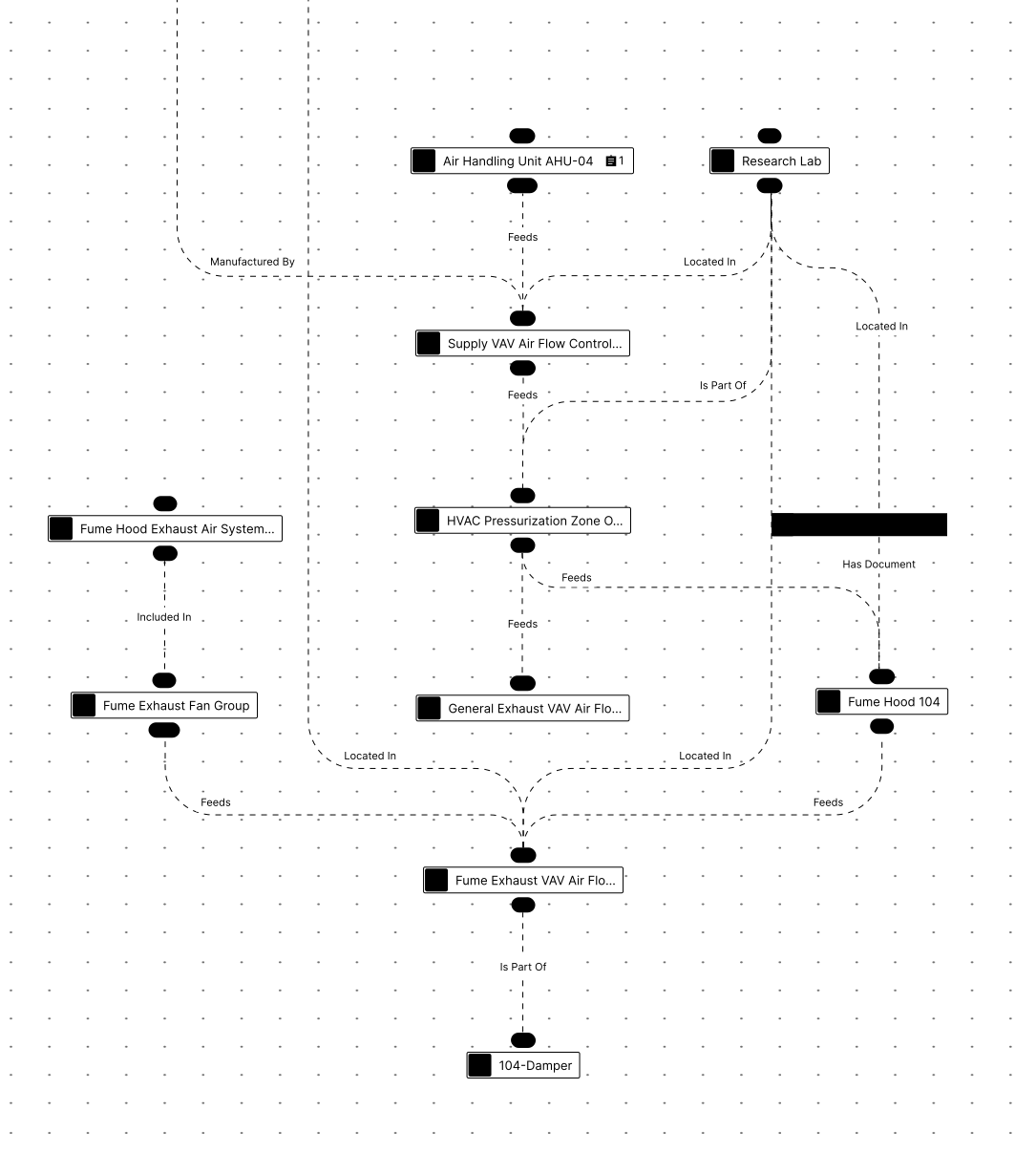
Willow’s ability to properly model the complete system in the robust data layer enables key use cases such as pressurization tracking, air change compliance, fume hood sash position detection, and energy conservation measures such as exhaust airflow reset and fume hood closure strategies as allowed by ASHRAE.Willow 能够在强大的数据层中对完整系统进行准确建模,从而支持各类关键用例,例如加压跟踪、换气合规性、通风柜视窗位置检测,以及 ASHRAE 允许的节能措施,如排风风量复位和通风柜关闭策略。
Modeling the complete system is only as good as the analytics’ ability to scale to the various types of system configurations. Willow’s graph-based, real-time analytics engine, Activate Technology, is able to scale to various types of scenarios such as multiple Supply VAV Valves and Exhaust VAV Boxes managing the zone with a common Exhaust Fan System with multiple fans managing multiple zones. This translates to faster deployment due to less customization and greater reliability during operations.对完整系统建模的效果,取决于分析能力能否扩展适配各种类型的系统配置。Willow 基于图谱的实时分析引擎 Activate Technology 能够扩展适配各类场景,例如多个送风 VAV 阀和排风 VAV 箱通过共用排风机系统管理一个区域,而包含多台风机的排风机系统管理多个区域。这意味着定制工作更少、部署更快,并且运行期间可靠性更高。
Hot/Cold Call Root Cause Analysis冷热报修根本原因分析
Comfort-related service requests are a relatable use case across domains, as occupants find rooms too hot or too cold. Let’s explore how Willow’s data layer enables this with ontology and data shapes.与舒适度相关的服务请求是各领域都很常见的用例,因为使用者会觉得房间太热或太冷。下面来看看 Willow 的数据层如何利用本体和数据形状实现这一点。
A typical hot or cold call starts with a reactive work order being submitted. Now the race is on to triage the incident, find the root cause, and fix it so that the space can be comfortable and the occupants can be productive. The best way to find the root cause is to have a full visibility into the upstream equipment serving the space. And the optimum mechanism to resolve the issue is to have a complete understanding of where to find the equipment to service it. Willow’s ability to onboard both the system topology and the locations of each of the assets helps detect the root cause and indicate precisely where and how to resolve the issue.典型的冷热报修始于提交一张被动响应工单。随后就要争分夺秒地对事件进行分级处置、找出根本原因并完成修复,使空间恢复舒适,让使用者能够保持高效。找到根本原因的最佳方式,是全面掌握服务于该空间的上游设备。解决问题的最佳机制,则是完全清楚应在何处找到设备并进行维修。Willow 能够同时载入系统拓扑和每项资产的位置,有助于检测根本原因,并精确指明在何处以及如何解决问题。

In this example, we can see the relationships in the Knowledge Graph that indicate where HVAC equipment like a VAV Box named AHU-4-5 is part of an upstream AHU Group. The graph also captures where the VAV Box is physically located and which rooms it serves. In this case, the physical location of the VAV Box is in Corridor 06, and rooms it serves are Consultation Room 06 and Resource Center. Further, we can see the twin for the Thermostat and its physical location.在此示例中,我们可以看到知识图谱中的关系,这些关系指明了名为 AHU-4-5 的 VAV Box 等 HVAC 设备如何成为上游 AHU Group 的一部分。图谱还记录了该 VAV Box 的物理位置以及它服务哪些房间。本例中,VAV Box 的物理位置位于 Corridor 06,其服务的房间是 Consultation Room 06 和 Resource Center。此外,我们可以看到温控器的孪生体及其物理位置。
The information is historically locked away and not readily available, making this use case unachievable. Willow is able to extract this key link from design and handover documents to hydrate the Knowledge Graph.这些信息过去一直被锁定,不易获取,致使该用例无法实现。Willow 能够从设计和移交文档中提取这一关键关联,以充实知识图谱。
With the twins and relationships in place, when a comfort issue is reported in Consultation Room 06, it’s easy for the facilities team to see the location of the Thermostat closest to that room. The ‘Serves’ relationship determines the relevant VAV Box. The ‘Located In’ relationship identifies the physical location of the VAV Box where the technician can be sent to perform repairs or servicing.有了这些孪生体和关系,当 Consultation Room 06 报告舒适度问题时,设施团队可以轻松查看离该房间最近的温控器位置。‘Serves’关系确定相关的 VAV Box。‘Located In’关系确定 VAV Box 的物理位置,从而可派技师前往执行维修或保养。
Space Occupancy Normalization空间占用归一化
Occupancy data is one of the most valuable sources of insight in modern buildings and use cases abound. Understanding space utilization and capacity can help facility teams identify underutilized areas and repurpose them. Occupancy-driven HVAC control strategies can respond to real-time signals such as badge swipes, camera-based human detection, or the counts of networked devices, e.g. laptops with unique MAC addresses used as proxy for employee presence. Room booking data can also be used to predict occupancy for spaces like classrooms in universities.占用数据是现代建筑中最有价值的洞察来源之一,相关用例十分丰富。了解空间利用情况和容量可帮助设施团队识别利用不足的区域并调整其用途。占用驱动型 HVAC 控制策略可响应实时信号,例如刷卡、基于摄像头的人员检测,或联网设备数量;例如,具有唯一 MAC 地址的笔记本电脑可作为员工在岗情况的代理指标。房间预订数据也可用于预测大学教室等空间的占用情况。
Catering to a range of systems that may be device-based or space-based, vendor approaches vary and as a result, occupancy data is one of the most inconsistent in our industry. Normalizing space occupancy to account for the variety of ways in which the IoT vendors report data, and how that relates to the organization’s space management topology can quickly get complicated. Some vendors report device-level people counts while others aggregate and report at the room level. And yet other vendors offer workstation sensors which report occupancy for the desk spaces within a larger open area.由于需要适配可能基于设备或基于空间的各类系统,供应商采用的方法各不相同,因此占用数据是本行业中最不一致的数据之一。为兼顾 IoT 供应商上报数据的多种方式,以及这些数据如何与组织的空间管理拓扑相关联,对空间占用进行归一化很快就会变得复杂。有些供应商上报设备级人员计数,而另一些则在房间层级汇总并上报。还有一些供应商提供工位传感器,用于上报较大开放区域内桌位空间的占用情况。
Ontologies often include basic building blocks such as Occupancy Zone, Occupancy Sensor Equipment, People Count Sensor Equipment, Occupancy Sensor, and Occupancy Count Sensor. However, building solutions at scale across vendor solutions quickly becomes complicated. Shapes provide the structure needed to normalize this data so that it can be used consistently across portfolios.本体通常包含 Occupancy Zone、Occupancy Sensor Equipment、People Count Sensor Equipment、Occupancy Sensor 和 Occupancy Count Sensor 等基本构建块。然而,跨供应商解决方案大规模构建解决方案很快会变得复杂。Shapes 提供了归一化这些数据所需的结构,使其能够在各资产组合中一致使用。
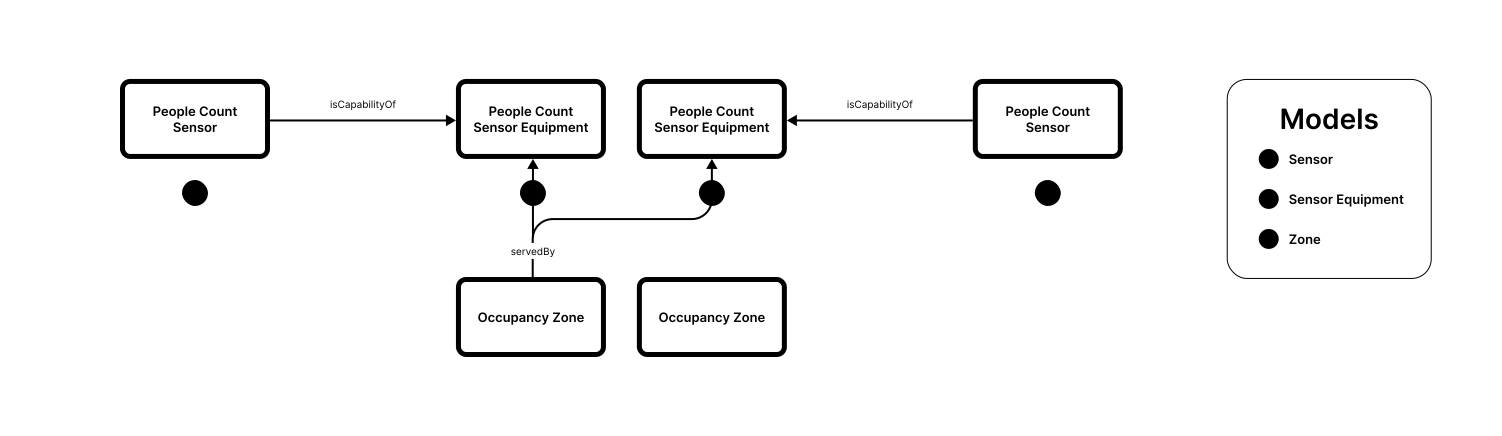
A key part of normalization is defining how devices relate to spaces. Willow’s modeling patterns in shapes clarify whether a device should be designated a space with the ‘Located In’, ‘Feeds’, or ‘Serves’ relationship. Another aspect is to manage telemetry data that may come in as a Change of Value (COV), or as a data stream polled at a specific interval, like once every 15 minutes.标准化的一个关键部分是定义设备与空间的关联方式。Willow 在 shapes 中的建模模式明确了设备应通过‘Located In’、‘Feeds’还是‘Serves’关系被指派到空间。另一方面是管理遥测数据,这些数据可能以数值变化(COV)的形式传入,也可能是以特定间隔轮询的数据流,例如每 15 分钟一次。
When multiple sources are leveraged to capture occupancy data in addition to booking information, a unique interplay lights up. Space utilization analytics can compare actual occupancy with expected occupancy as indicated by reservations.当利用多个来源采集占用数据并结合预订信息时,一种独特的协同效应便会显现。空间利用率分析可以将实际占用情况与预订所显示的预期占用情况进行比较。
Space reservation is critical to enabling occupancy-driven HVAC use cases. Organizations report higher energy savings because booking information can often cover more rooms than have occupancy or people count sensors installed. Let’s walk through an example.空间预订对于启用占用驱动的 HVAC 用例至关重要。各机构报告了更高的节能量,因为预订信息通常能够覆盖比安装了占用或人员计数传感器的房间更多的房间。让我们来看一个示例。

The building’s purpose often informs how much energy savings are to be had from this use case, but there is no denying that most building types can take advantage of variations in daily, weekly, and even seasonal (i.e. summer break) changes in occupancy. These patterns often reflect a clear opportunity to optimize energy usage, such as dialing down during downtime while maintaining comfort during active use hours. Willow’s Active Control functionality turns quiet periods into powerful gains in sustainability.建筑的用途通常决定该用例能够实现多少节能,但不可否认,大多数建筑类型都能利用占用情况在每日、每周甚至季节性(即暑假)变化中的差异。这些模式通常反映出优化能源使用的明确机会,例如在非工作时段调低运行,同时在活跃使用时段保持舒适度。Willow 的 主动控制 功能将安静时段转化为可持续性方面的显著收益。
Closing Thoughts结语
Whether optimizing a lab’s exhaust system, continuously commissioning a hot water loop, or normalizing occupancy data across vendors and automating occupancy-driven HVAC control, the value comes from a data layer that understands both the physical world and the intent behind it.无论是优化实验室排风系统、持续调试热水循环回路,还是跨供应商标准化占用数据并实现占用驱动的 HVAC 控制自动化,其价值都来自一个既能理解物理世界又能理解其背后意图的数据层。
Across these examples, a common theme emerges. Willow’s data layer, comprised of the ontology, shapes, and data, help facility teams achieve outcomes for operational efficiency. By being the leader in each of these three aspects of the data layer, Willow achieves faster deployment times, better coverage of skills across unique system topologies and types beyond HVAC, and ultimately more value realized.在这些示例中,一个共同主题浮现出来。Willow 的数据层由本体、shapes 和数据组成,帮助设施团队实现运营效率成果。凭借在数据层这三个方面的领先地位,Willow 实现了更快的部署、对 HVAC 以外各类独特系统拓扑和类型更出色的技能覆盖,并最终实现更多价值。
We challenge you to unlock the true potential of your unique facilities. Envision a world where every kilowatt-hour or liter of water is consumed responsibly and every system is running in its optimal state, maximizing its longevity and optimizing the environment for those within.我们邀请您挑战释放自身独特设施的真正潜力。设想这样一个世界:每一千瓦时电或每一升水都得到负责任的使用,每个系统都以最佳状态运行,最大限度延长使用寿命,并为身处其中的人员优化环境。
The post Real World Applications of Willow’s Data Layer appeared first on Willow.文章 Willow 数据层的实际应用 首发于 Willow。
来源:Willow 建筑运营与数字孪生 · willowinc.com